ENTERPRISE AI TRANSFORMATION

Start with one workflow. Turn AI into organisational capability.

Stardev helps companies redesign high-value work, develop internal AI pioneers, and retain methods, knowledge and rules as reusable company capability.

Workflow redesign · Talent development · Knowledge retention

Start with one workflow—or start with the whole company.

Both entrances lead to the same path: create a real business result, spread the working method to more people, then retain it as company capability.

A REAL STARDEV PROJECT · REGIONAL PILOT FOR A LISTED FMCG GROUP

Work once shared by more than ten peoplenow runs with one employee and AI.

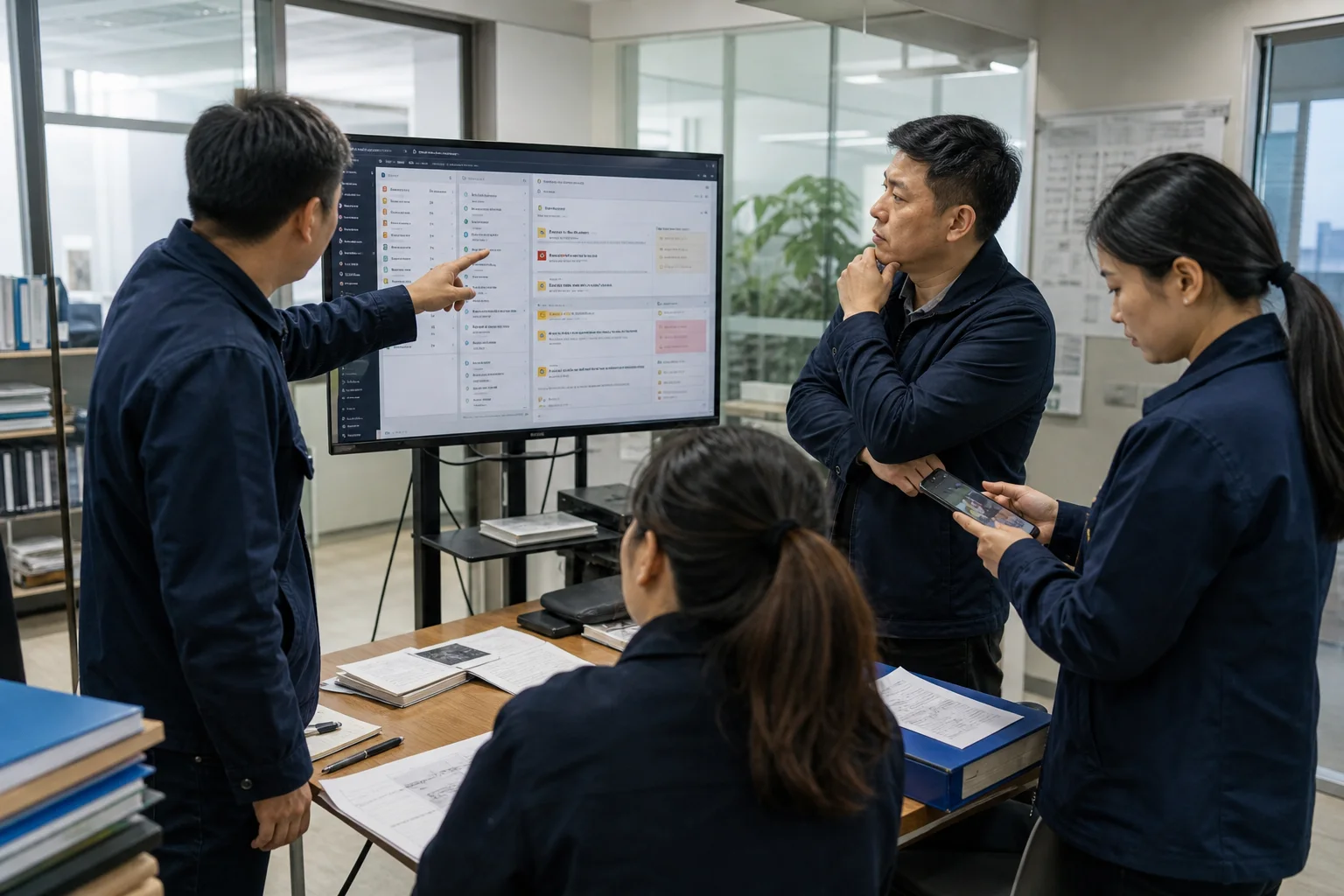
A sales-led listed FMCG group operates sales-support teams across several regions. Its Hong Kong lead invited Stardev to run a pilot: turn frequent order-follow-up work from images, voice messages and purchase orders into an AI-led workflow with staff confirmation.

Another large market in the same group still has sixty to seventy people supporting similar work. The Hong Kong project shows that AI can do more than make one person faster: it can redesign how a team operates.

View the complete order project
10+ people1 person + AI
The new Hong Kong sales-support setup
8 hours0.5 hour

Weekly order-entry time for one back-office role

  1. 01Receive non-standard orders
  2. 02Check customer, product and price
  3. 03Staff confirm key decisions
  4. 04Produce files for existing systems

Make one workflow work.Develop a network of people.Retain it as organisational capability.

Stardev treats AI transformation as three connected layers—not as the purchase of one more tool.

01

AI-enabled workflows

Prove that AI can make one real piece of work faster and more reliable.

Map the workflow, find the real constraint, define the division of work between AI and staff, and connect it to existing operations.

  • Workflow diagnosis
  • AI workbench or specialist
  • Human decision gates
  • Measurable outcomes
02

AI pioneer network

Turn one person’s capability into a wider organisational movement.

Use real projects for internal learning, identify high-potential AI pioneers, and connect role profiles, development and OKRs to the transformation.

  • Internal case training
  • AI pioneer identification
  • Cross-functional project community
  • Role profiles and OKRs
03

AI-native organisation layer

Make methods, knowledge and rules belong to the company—not one person.

Create a governed company knowledge container with permissions and versions, continuously retaining approved conversations, workflows, prompts, rules and deliverables.

  • Company knowledge container
  • Permission and version governance
  • Reusable work mechanisms
  • Handover and continuous improvement

When a key employee leaves,the company should not forget.

What matters is not how many conversations one person had with AI. It is the decisions, rules and working methods the company has already validated. Stardev turns them into a traceable system that the next person can inherit and continue improving.

  • Retain approved decisions, workflows, versions and outcomes—not an undifferentiated pile of every conversation.
  • Keep source material in existing systems while adding one knowledge map, permission model and source trail.
  • Prompts, workflow rules, decision criteria and handover records belong to the company, not a personal account.
  • New hires can inherit the right context, standards and prior judgement by permission instead of starting from zero.
Employee experience and real work
Company knowledge and work system
Next employee + AI
Turn every AI initiative into capability the company owns.

The earlier you begin, the sooner your company compounds its own AI capability.

You do not need to redesign the whole company on day one. Start with one valuable workflow, prove the result, then decide how to scale it across people and the organisation.

Turn the work you chase every day into work that keeps moving.

A customer message starts an order. Before a store visit, the route, talking points and priority products are ready. Before the day begins, managers receive a clear business brief. Start with three common ways to put AI to work.

Explore all projects & solutions

One task, one AI specialist. Complex work, a team in relay.

AI handles the repetitive work first. People keep the key decisions.

One task entryDescribe the work in one chat window.

You do not need to choose the role first. Stardev assigns one specialist or a coordinated team based on the task.

Simple task · one specialistComplex work · specialist team
01Simple task
Client details
Order specialist
Order draft
Staff review

One task, owned by one specialist

02Complex work
New lead
Contact
Order
Follow-up
Key approval
How the work runs now
01People gather the inputs

Information is found across chats, spreadsheets, and separate systems.

02People process each step

Organising, checking, and follow-up are completed manually.

03People chase the progress

Every step needs someone to check, remind, and hand it over.

How it runs with AI
01AI specialists receive the request

The task and required materials enter through one place.

02AI handles the repetitive work

It organises, checks, drafts, and flags exceptions first.

03People make the key decisions

They confirm important results, handle exceptions, and decide what happens next.

Start with the work, not a large solution plan.

Bring one recent piece of work, find the part worth improving first, and let a small team use it in practice.

How we work
From the management floor:Give time back to the business
From the management floorGive time back to the business

Stardev began with one practical question: why are people still spending so much time on repetitive processes?

Stardev founder Kevin previously held senior management roles at a Fortune Global 500 company and a publicly listed multinational group. Like many business leaders, he had to move the business forward while also finding information, checking details, chasing updates, and preparing documents—repetitive work that still had to get done.

When AI became genuinely useful, Kevin first applied it to his own work, then to the way his teams worked together. He saw that the problem was rarely a lack of effort; too much capable time was being spent completing processes for the sake of the process. Stardev grew from a practical idea: let AI take on the repetitive but necessary work, so people can focus on judgement, customers, and business growth.

01

Start with one task that happens every day

Begin with information gathering, follow-ups, document preparation, or a single approval—and give the team time back where they can feel it.

02

Make the process serve the business

Let AI gather, check, organise, remind, and prepare the next step, so people spend less time chasing the process.

03

Keep important decisions human

AI prepares the information, highlights what matters, and moves the next step forward. Judgement, customer relationships, and critical decisions stay with the people who know the business best.

Common questions.

AI specialists, team collaboration, pricing, deeper services, and accountability.

01What is the difference between one AI specialist and an AI specialist team?

The difference is not which is “smarter,” but whether the work needs division of labour. One AI specialist suits a focused task with a clear scope and repeatable steps: it uses a defined set of knowledge, rules, and tools to produce one result. A specialist team suits work that spans several stages, with different specialists handling research, analysis, drafting, or execution before a coordinating role combines and checks the result. For a hypothetical example, one meeting-notes specialist may be enough to turn a transcript into action items. If the job runs from a customer brief through market research, solution design, a quotation draft, and follow-up, research, solution, data, and follow-up specialists can work together before a person confirms the final result.

02Can it connect to WeChat, Lark, Excel, CRM, or ERP?

In many cases, yes. We first check whether the existing system supports a direct connection, or start with file import, export, or browser-based work. Complex ERP changes, custom development, company-hosted deployment, and large moves of old data are assessed separately.

03What happens when AI is wrong? Does it replace staff decisions?

AI can be wrong, so we do not let it carry a process through without limits. Before launch, we agree what it may handle on its own and what always needs a person’s confirmation. If information is missing, conflicting, or outside the agreed rules, the AI stops and asks the responsible person instead of guessing. It can organise information, prepare drafts, and update routine records, while payments, approvals, external messages, and contractual commitments still require a person’s final decision. We also keep a record of the steps so mistakes can be found and corrected.

04Do you offer enterprise training or deeper AI deployment beyond specialist teams?

Yes. We can deliver enterprise training and hands-on workshops, then continue by simplifying the work, organising company materials, connecting complex systems, or deploying in the company’s own environment. For a first structured move into AI, teams can bring real work into the room, identify the best part to hand over first, and only then decide whether to build a longer-term solution. Scope and pricing are agreed separately.

05Are model fees, software, and ongoing support included?

Packages include the stated build, trial, and adjustment work. Third-party AI fees, software subscriptions, travel, extra material preparation, and ongoing support are confirmed separately. For sensitive information, we first agree who may see it, which external services are used, and how it is kept.

Choose the work that drains your team most.

Start with one real task and decide what to fix first, what AI should do, what people still own, and how to put it into use.

INTERNATIONAL · COMPANY EMAIL

Leave your contact details and we will reach out.

Wherever your team is based, email a short description of the work and include your preferred email address or phone number.

What happens next
  1. Describe the workflow you want to improve
  2. Leave an email address or phone number
  3. We contact you to confirm the next step
START A CONVERSATION

Tell us what you want to improve.

Share a few details about the work. We will check fit first, then contact you about the next step.

Enter at least an email address or a phone / messaging contact.

Do not include passwords, customer lists, or other sensitive information. This site does not currently store the form.

This opens your email app. Stardev receives the details only after you confirm and send the email.